Automation is often treated as an automatic good.
In reality, automation is only leverage when the timing, resources and commercial priorities are right.
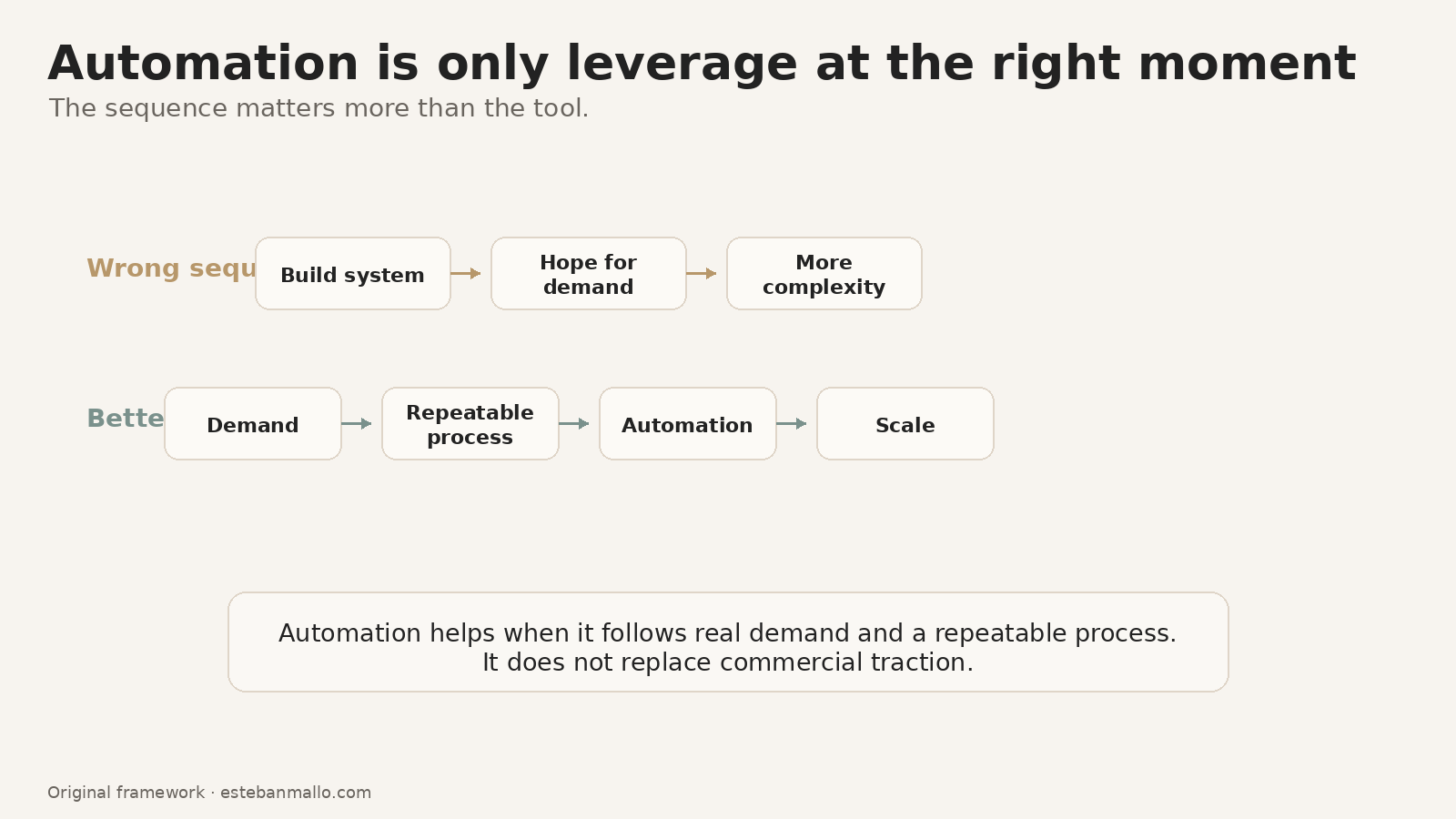
One of the easiest mistakes in small businesses is to build systems too early.
If demand is still uncertain, if the offer is still moving and if the team is still solving basic operational issues, adding more sophistication can create more complexity than value.
Automation is powerful when it follows something that already works. It can strengthen rhythm, reduce friction and make a business more scalable. But it is a poor substitute for commercial focus.